
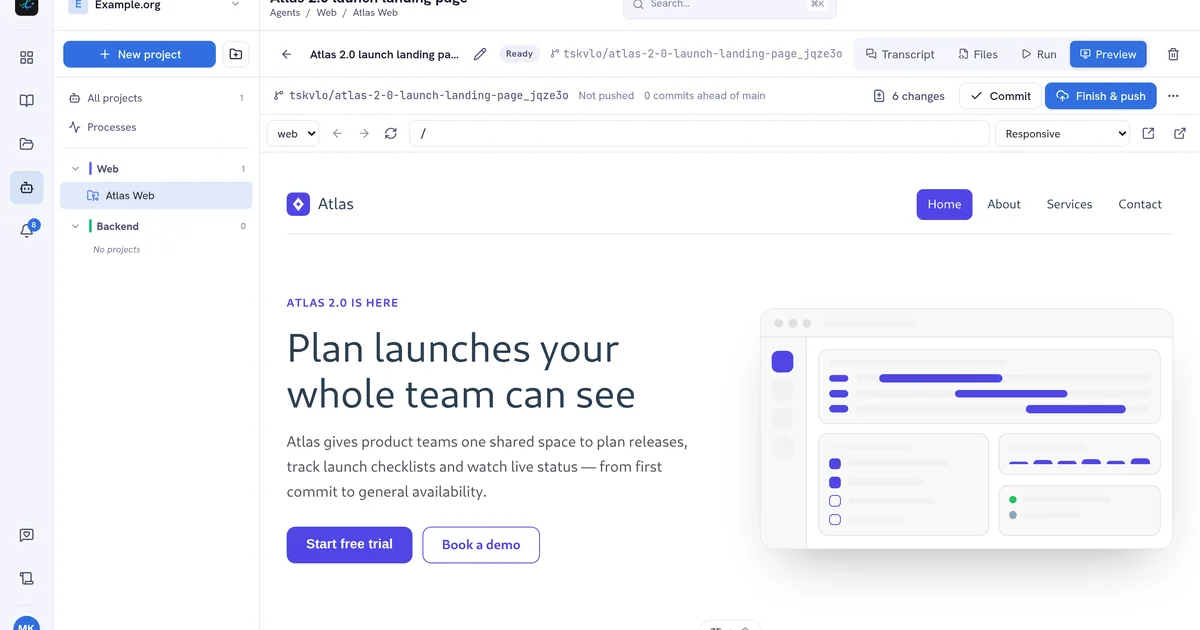
Planning work and doing the work have always lived in different tools. The task sits on a board, the code sits in a repository, and somebody copies context back and forth between them. With today’s release, TskVlo closes that gap: the new Agents section in the navigation rail brings interactive coding agents into the same workspace as your boards, wiki and files.
You describe what should change, an agent works on its own branch, and you watch, steer and decide what gets merged.
Interactive, Not Fire-and-Forget
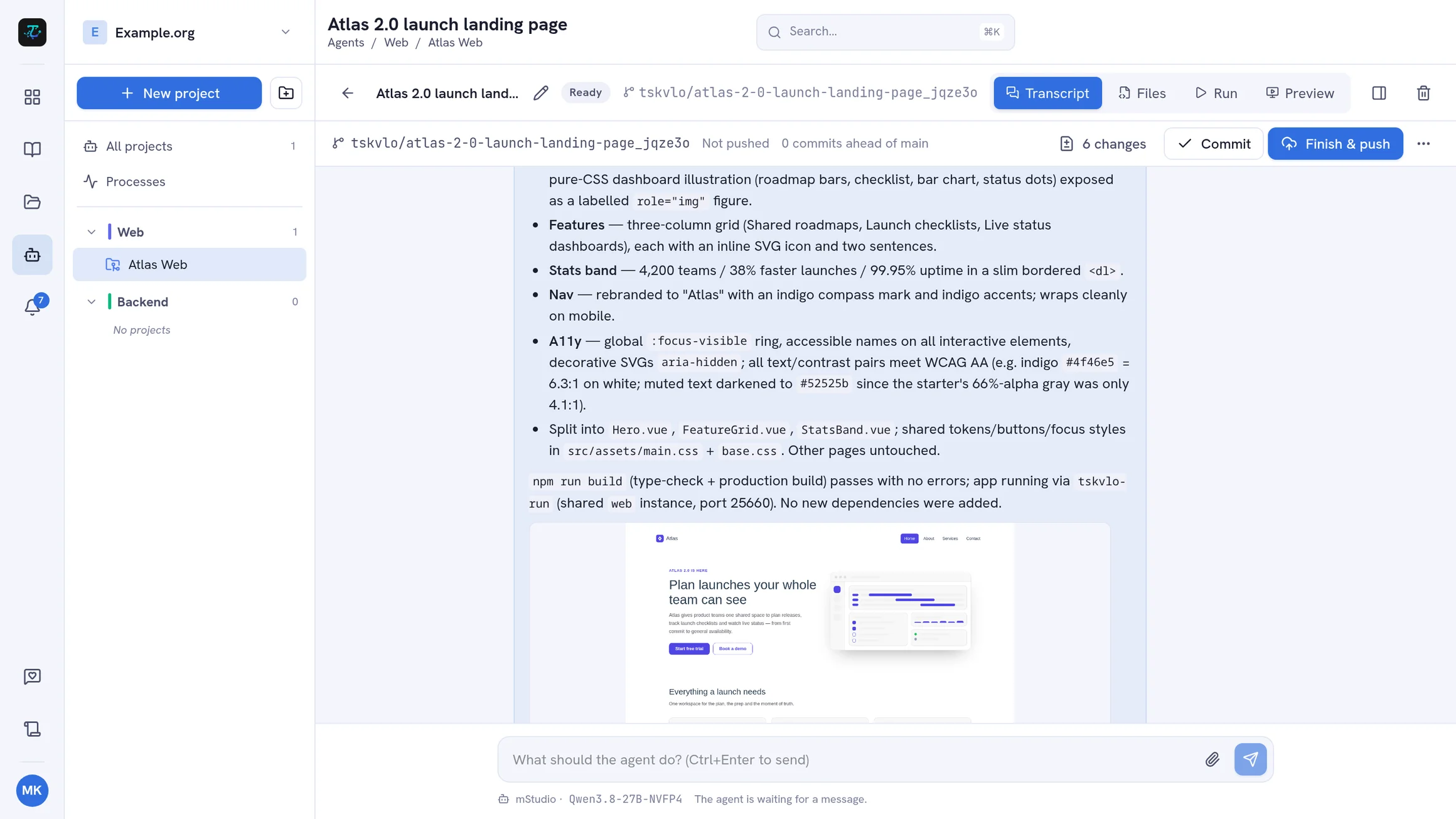
A coding agent in TskVlo is a conversation, not a black box. Each session streams the agent’s work into a live transcript: its messages and reasoning, every tool call with the diff it produced, its todo plan, and screenshots it takes of the result.
You stay in the loop the whole time. Send a follow-up while the agent is still working and it is queued for the next turn. Stop a turn if it heads in the wrong direction. Attach a screenshot or a zip archive to show what you mean. And when you want to fix a detail yourself, the built-in file editor opens the session’s worktree with every changed file highlighted.
Start From the Task You Already Have
The best context for an agent is the task your team already wrote. Open a task’s Code tab and click Start agent session: TskVlo sends the title, description and comments as the first message. When the work is pushed or merged, the commits are linked back to the task through your GitHub or GitLab connection, so the board shows what was built for it.
One Branch per Session, Nothing Merged Behind Your Back
Every session gets its own branch and worktree, created from the base branch you choose. Several sessions on the same repository run side by side without touching each other’s files.
Nothing reaches your remote until you say so. The git bar under each session shows what changed, and from there you:
- review every file with its diff,
- commit as yourself, with an AI-written message if you like,
- Finish & push the branch, optionally after the agent updates the project wiki,
- Merge it into its base branch.
See the App Running Next to the Chat
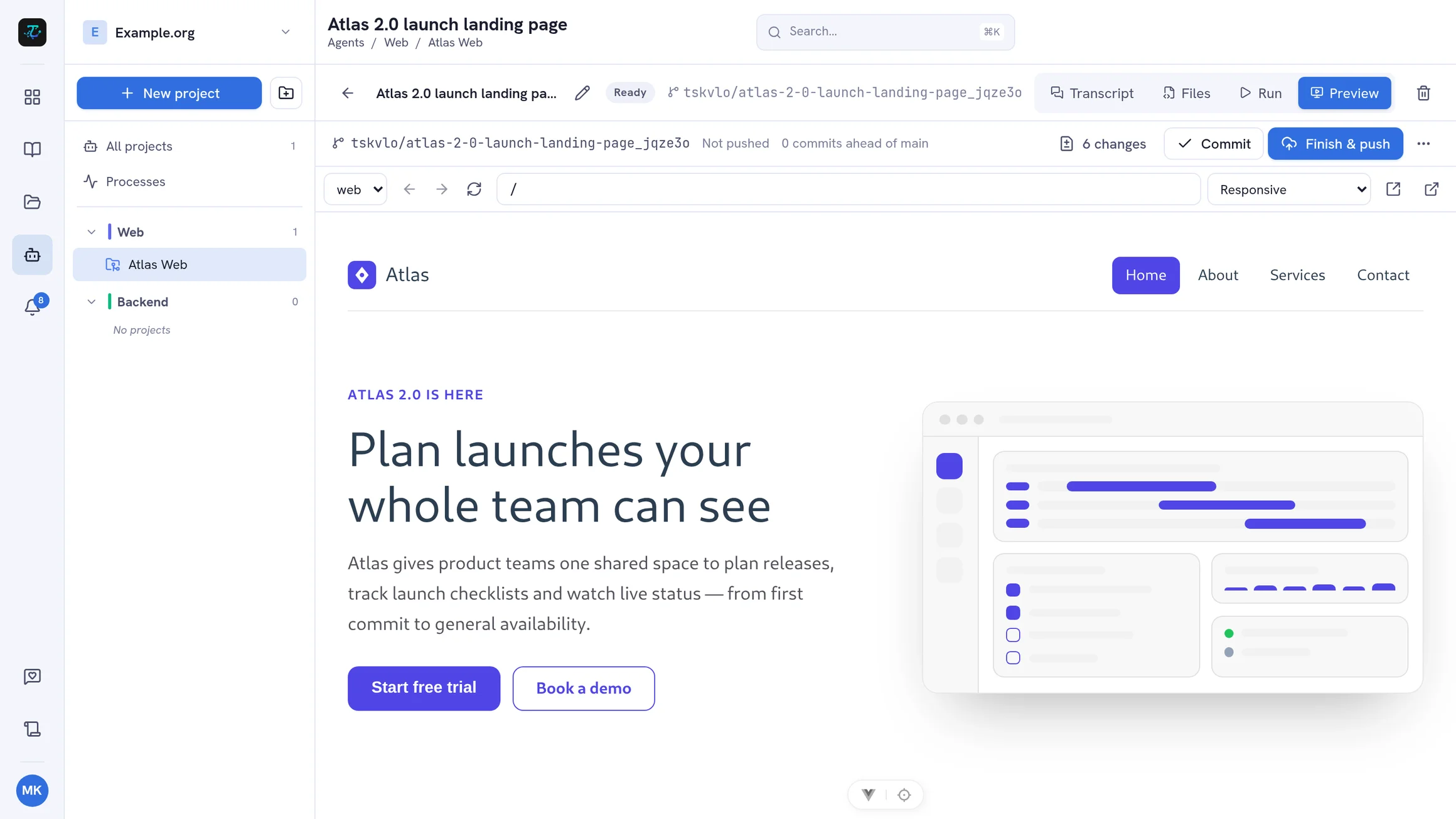
Reading a diff only tells you so much. A project can declare its app’s processes in a run configuration (setup step, command, port, environment), and each session can start them with live logs. The Preview shows the running app on its own private address, right next to the conversation, with device sizes from phone to desktop. Hot reload keeps working, so you see the agent’s changes as they land.
Agents use the very same processes, and they get test services to work against: PostgreSQL, MariaDB, Redis and S3, each with an isolated account for your workspace.
Loops for Work That Is Too Big for One Conversation
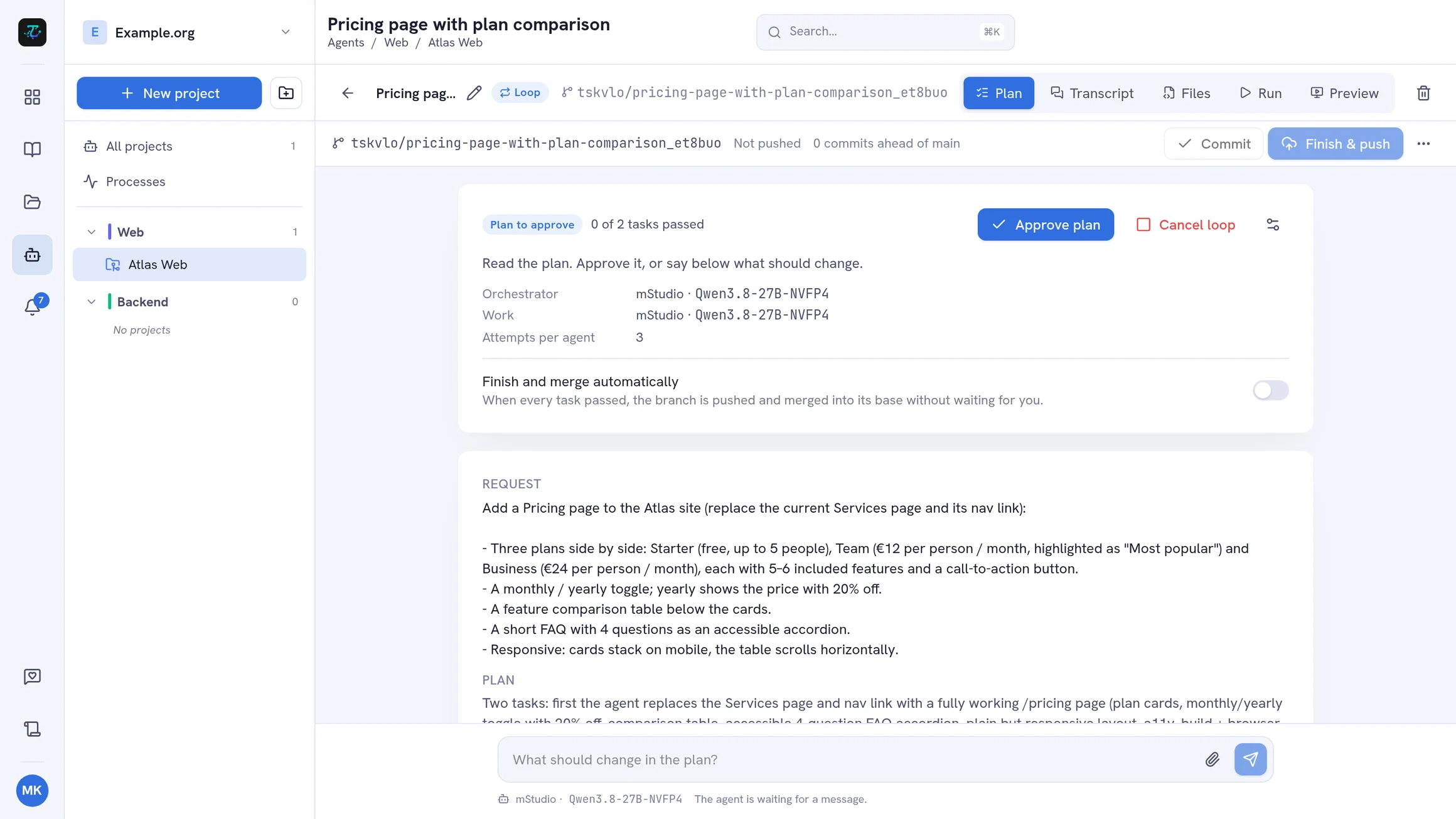
Some requests are a whole feature, not a single change. Switch on Run as a loop and an orchestrator plans the request into tasks with acceptance criteria. You approve the plan or ask for changes. Then fresh agents work the tasks one at a time, the orchestrator checks each result against its criteria, and every task that passes becomes its own commit.
You can pause, resume, retry a blocked task or cancel at any point, and pick separate agents for regular work, design tasks and as a fallback. When all tasks have passed, ask for more, finish and push, or let the loop merge automatically.
Agents That Know Your Project
Every agent starts by reading the project wiki: a short document in the repository that explains its purpose, layout and conventions. An agent can write the first version for you, and it can bring the wiki up to date before a session is pushed, so the next agent starts with current knowledge. Project rules add standing instructions on top: coding conventions, how to run the tests, what not to touch.
Agents can also use the MCP servers your workspace already connects, switched on per project, and a built-in browser for opening pages and taking screenshots.
Your Providers, Your Container
Every workspace gets its own private agent container. It’s created when an admin adds the first AI provider, and from then on TskVlo starts, stops and updates it for you. Bring OpenCode Go, Mistral, OpenAI or any OpenAI-compatible endpoint: keys are checked when you save them and stored encrypted, and one SSH deploy key per workspace gives the agents access to your repositories.
Members start and steer sessions; viewers can read every transcript. You get a notification when a session finishes or fails a turn, and when a loop needs your approval.
Try It Today
Coding agents are part of the public beta, free like every other TskVlo feature. Open Workspace settings → Agents, add a provider, add the deploy key to a repository, and start your first session.